
Morse code is a special way of writing letters and numbers using only two symbols: dots (·) and dashes (–). Think of it like a secret language where every letter has its own pattern of short beeps and long beeps.
A dot is a short signal, and a dash is a long signal (about three times longer than a dot). By combining these dots and dashes in different patterns, you can spell out any word you want.
How Does the Morse Code Alphabet Work?
Every letter and number has its own unique pattern. Here are some examples:
- A = · – (dot-dash)
- B = – · · · (dash-dot-dot-dot)
- C = – · – · (dash-dot-dash-dot)
- S = · · · (dot-dot-dot)
- O = – – – (dash-dash-dash)
When you put these together, you can spell words. For example:
SOS (the famous distress signal) = · · · – – – · · ·
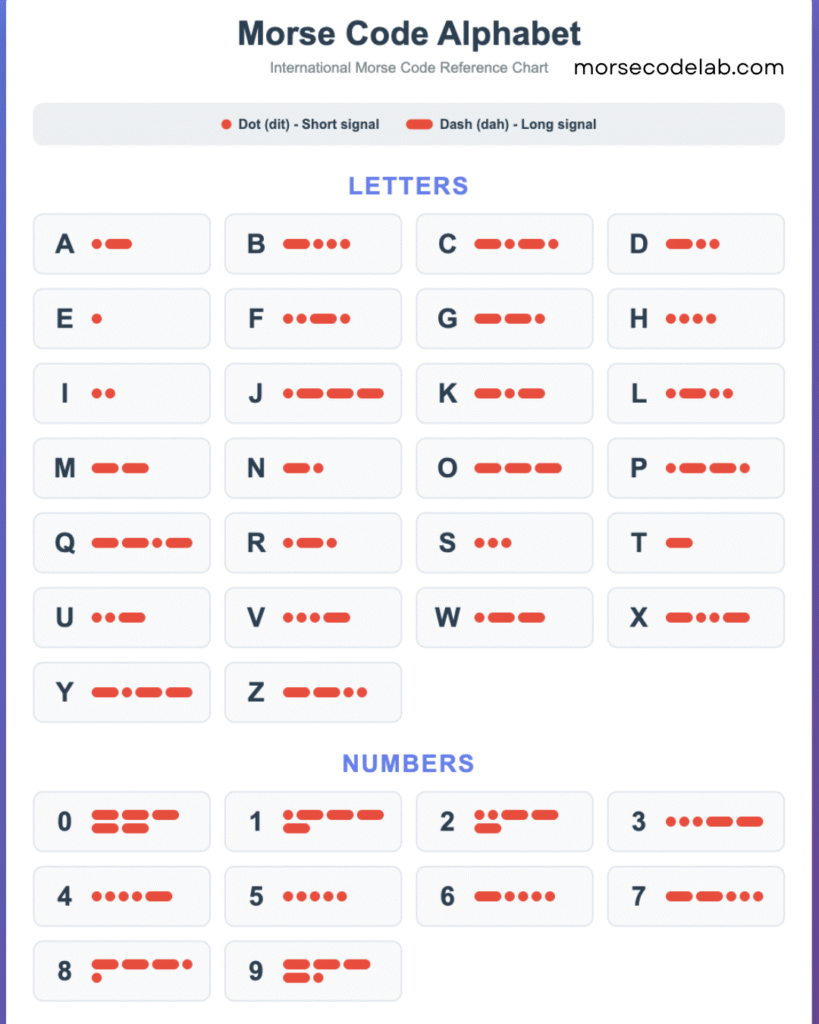
English/Latin alphabet in Morse code
Letters (A-Z)
| Letter | Morse Code | Audio Pattern |
|---|---|---|
| A | · − | dit-dah |
| B | − · · · | dah-dit-dit-dit |
| C | − · − · | dah-dit-dah-dit |
| D | − · · | dah-dit-dit |
| E | · | dit |
| F | · · − · | dit-dit-dah-dit |
| G | − − · | dah-dah-dit |
| H | · · · · | dit-dit-dit-dit |
| I | · · | dit-dit |
| J | · − − − | dit-dah-dah-dah |
| K | − · − | dah-dit-dah |
| L | · − · · | dit-dah-dit-dit |
| M | − − | dah-dah |
| N | − · | dah-dit |
| O | − − − | dah-dah-dah |
| P | · − − · | dit-dah-dah-dit |
| Q | − − · − | dah-dah-dit-dah |
| R | · − · | dit-dah-dit |
| S | · · · | dit-dit-dit |
| T | − | dah |
| U | · · − | dit-dit-dah |
| V | · · · − | dit-dit-dit-dah |
| W | · − − | dit-dah-dah |
| X | − · · − | dah-dit-dit-dah |
| Y | − · − − | dah-dit-dah-dah |
| Z | − − · · | dah-dah-dit-dit |
Numbers (0-9)
| Number | Morse Code | Audio Pattern |
|---|---|---|
| 0 | − − − − − | dah-dah-dah-dah-dah |
| 1 | · − − − − | dit-dah-dah-dah-dah |
| 2 | · · − − − | dit-dit-dah-dah-dah |
| 3 | · · · − − | dit-dit-dit-dah-dah |
| 4 | · · · · − | dit-dit-dit-dit-dah |
| 5 | · · · · · | dit-dit-dit-dit-dit |
| 6 | − · · · · | dah-dit-dit-dit-dit |
| 7 | − − · · · | dah-dah-dit-dit-dit |
| 8 | − − − · · | dah-dah-dah-dit-dit |
| 9 | − − − − · | dah-dah-dah-dah-dit |
Punctuation & Special Characters
| Character | Morse Code | Audio Pattern |
|---|---|---|
| . | · − · − · − | dit-dah-dit-dah-dit-dah |
| , | − − · · − − | dah-dah-dit-dit-dah-dah |
| ? | · · − − · · | dit-dit-dah-dah-dit-dit |
| ‘ | · − − − − · | dit-dah-dah-dah-dah-dit |
| ! | − · − · − − | dah-dit-dah-dit-dah-dah |
| / | − · · − · | dah-dit-dit-dah-dit |
| ( | − · − − · | dah-dit-dah-dah-dit |
| ) | − · − − · − | dah-dit-dah-dah-dit-dah |
| & | · − · · · | dit-dah-dit-dit-dit |
| : | − − − · · · | dah-dah-dah-dit-dit-dit |
| ; | − · − · − · | dah-dit-dah-dit-dah-dit |
| = | − · · · − | dah-dit-dit-dit-dah |
| + | · − · − · | dit-dah-dit-dah-dit |
| – | − · · · · − | dah-dit-dit-dit-dit-dah |
| _ | · · − − · − | dit-dit-dah-dah-dit-dah |
| “ | · − · · − · | dit-dah-dit-dit-dah-dit |
| $ | · · · − · · − | dit-dit-dit-dah-dit-dit-dah |
| @ | · − − · − · | dit-dah-dah-dit-dah-dit |