
When you’re stranded in the wilderness, lost at sea, or stuck in a remote location, getting someone’s attention can mean the difference between rescue and disaster. This SOS Signal Visualizer turns your phone or tablet into an emergency signaling device, producing the universally recognized SOS pattern through light and sound. Whether you’re learning survival basics or need a backup signaling tool in your emergency kit, this tool helps you send a distress signal that rescuers worldwide will recognize. Also, learn Morse Code & NATO Phonetic Alphabet
What Does SOS Mean?
Contrary to popular belief, SOS doesn’t actually stand for “Save Our Souls” or “Save Our Ship.” These phrases came later as memory aids. The signal was adopted in 1906 simply because it’s easy to transmit and impossible to misinterpret in Morse code.
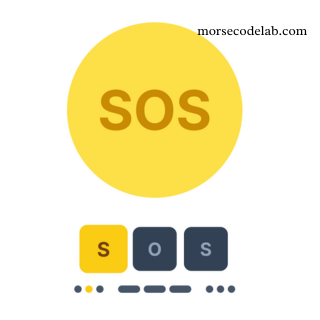
In Morse code, SOS is written as three dots, three dashes, three dots (· · · — — — · · ·). The pattern is distinctive: three quick signals, three longer signals, three quick signals. This rhythm stands out against random noise or natural light patterns, making it immediately recognizable to trained rescuers, pilots, and sailors.
The signal is internationally recognized. No matter where you are in the world, an SOS signal communicates one thing: someone needs help.
How to Use This SOS Signal Generator
Using the tool is straightforward:
Start the signal by tapping the green “Start SOS” button. Your screen will begin flashing the SOS pattern automatically, with the entire display turning bright white for each signal element.
Choose your speed based on your situation. Slow mode works well for learning the pattern or when conserving battery. Medium speed is the standard signaling rate. Fast mode creates a more urgent, attention-grabbing signal for critical situations.
Enable sound by tapping the speaker icon. The tool produces an 800Hz tone synchronized with each flash, useful when visual signals alone might not be enough, such as in foggy conditions or when potential rescuers are nearby but not looking in your direction.
Use fullscreen mode for maximum visibility. This removes all interface elements and turns your entire screen into a flashing beacon. Tap anywhere on the screen to temporarily show controls when needed.
How to Signal SOS With a Flashlight
Understanding the manual technique matters because batteries die and devices fail. Here’s how to signal SOS with any light source:
The timing pattern follows a simple rule: short signals (dots) should be about one second, long signals (dashes) should be about three seconds. Keep a brief pause between each signal element, and a longer pause between letters.
The sequence goes like this:
- Three short flashes (S)
- Pause
- Three long flashes (O)
- Pause
- Three short flashes (S)
- Longer pause, then repeat
Point your light toward potential help. Aim at aircraft, boats, distant roads, or anywhere rescuers might be searching. At night, a flashlight beam can be visible for miles under clear conditions.
Be consistent. Keep repeating the pattern. Rescuers may need time to notice the signal, confirm it’s intentional, and triangulate your position.
Other Ways to Signal SOS
The SOS pattern works with more than just light. You can use a whistle, horn, or even banging on metal with the same three-three-three rhythm. During daylight, a signal mirror reflecting sunlight in the SOS pattern is visible from extraordinary distances. Some survivors have spelled out SOS using rocks, clothing, or branches in clearings where aircraft might spot them.
Frequently Asked Questions
Will rescuers really recognize this signal? Yes. Search and rescue teams, coast guards, pilots, and military personnel worldwide train to recognize SOS. It’s been the international standard for over a century.
Does my phone screen produce enough light to be seen? In darkness, a smartphone screen at full brightness is visible from several hundred meters. It won’t match a dedicated flashlight, but it’s far better than nothing. Fullscreen mode maximizes the light output.
Should I keep the signal running continuously? If battery life isn’t a concern, yes. If you need to conserve power, signal in intervals: run it for a few minutes, rest, then signal again. Rescuers often scan an area multiple times.
What if I don’t have any device or flashlight? Learn the pattern now so you can reproduce it manually with any light source, reflective surface, or sound-making object. The rhythm of three-three-three is what matters most.
Is there a difference between SOS and Mayday? SOS is a visual or audio signal sent via light, sound, or telegraph. Mayday is a spoken distress call used over voice radio. Both indicate a life-threatening emergency.
Can I practice without triggering a real emergency response? Practicing indoors or in your backyard is fine. Avoid signaling SOS in public spaces, near airports, or in areas where it might be mistaken for a genuine distress call.